A CONVERSATION ABOUT SKETCHBOOKS
- Robbie Gonçalves
- Feb 1
- 6 min read

Updated: Feb 3

Recently, I have participated in several courses on sketchbook practices, and I would like to share this magical journey with you.
WHAT IS A SKETCHBOOK?
A sketchbook is a fundamental element for artists. It is the primary tool for developing creativity and working the imagination. Because imagination is a muscle that needs to be exercised constantly!
The sketchbook is an extension of the artist's imagination; its content is the "materialization" of their ideas and thoughts. It is something very personal and intimate.
Lately, with the exponential growth of social media, we have seen people with incredible sketchbooks—a masterpiece on every page. There is a hidden competition for who can make the most beautiful sketchbook. Because of this, we’ve started demanding more of ourselves... and drawing less.
The word SKETCHBOOK literally means a "book of sketches" (Sketch = draft/esboço; Book = livro), and that is exactly what is being lost. If it were a book of masterpieces, it would be called an ARTBOOK.
Who doesn't have that expensive sketchbook bought years ago at a shop or during a trip that has never been used? It sits there, waiting for you to reach perfection so you can create only wonderful works in it. The years go by until the day you discover the pages are yellowed and moldy...
I had sketchbooks like that until this year. My beautiful Sennelier, bought in Paris near Notre Dame three years ago. I always told myself that one day I would make incredible art in it... but that day never came, and it was left aside, abandoned. I used to handle it while still in its plastic wrap, never having the courage to open it.
One day, I noticed small yellow spots on the edges... I panicked. And that was the trigger to finally open it and make the first painting.
MY JOURNEY WITH SKETCHBOOKS

I am a huge fan of sketchbooks today, but I wasn't for many years. I believed it was a waste of time to make sketches that "served no purpose." That changed when I actually started working with children's book illustration. I discovered the importance of experimentation and artistic chaos after deciding to take courses on sketchbooks and different artistic styles.

My drawings used to be precise and well-studied, and I didn't believe that mess and imaginative chaos were necessary to create. The sketchbooks helped me. Today, I use them in many different ways. I have several unfinished sketchbooks, each for a different purpose. I am in no rush to finish them.
I also have a sketchbook that goes everywhere with me. It’s called “CHAOS AND DESTRUCTION.” I chose a small A6 notebook that fits in any bag and a multi-color Pentel pen. You have no idea what a multi-color pen and a little notebook can do for your imagination!
TYPES OF SKETCHBOOKS:
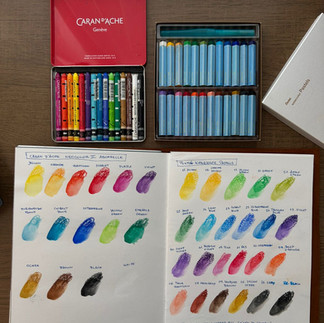
Studies and material experimentation;
Observational drawing;
Idea development (excellent for books and projects);
Self-expression (“Chaos and Destruction”);
Travel, documentation, and reading.




BENEFITS OF HAVING ONE OR SEVERAL SKETCHBOOKS:
All your drawings and ideas in one place;
Categorizing drawings by theme (making it easy to find an idea);
Portability;
No responsibility to be perfect;
Exercise for imagination, cognition, focus, and creativity;
Using your hands and feeling the materials is as important as handwriting; it activates specific brain areas, favoring learning and deep understanding. It improves memory and promotes critical thinking through the slower pace of creation;
Losing the fear of making mistakes. We don't erase "errors," allowing us to track our personal development.




THE POWER OF IMAGINATION AND CREATIVITY
What kills our creativity the most these days? Cell phones and social media. They have found a way to trap artists in a vicious cycle, a mental prison.
Take Instagram, for example: they created a platform for people to share their creative vision. And what happened next? They realized artists didn't get addicted easily; they posted and interacted, but the focus remained on imagination and creation. So, they created rules. They invented tools to trap the artist in a loop of trying to understand the algorithm.
Robbie thought, "Wow! People are seeing and liking my art!" This encouraged her to draw and post more. However, Robbie didn't spend much time on social media because she was focused on creating art. So, they made the process harder. They invented more rules.
You need to make videos, post 7 reels per week (1 per day), in addition to trial reels (and these need to be created using the EDITS app); alternate with posts as well, but they need to be carousels, otherwise we won't deliver your content. Don't use hashtags, but the first two words of the text need to be specific to search engines, otherwise we won't deliver your content. Rewrite the text using Instagram's AI, otherwise we won't deliver your content well. You need to be online and responding to everything for at least the first hour after posting, otherwise we will stop delivering your content. You need to create a hook to hold people's attention for 3 seconds, otherwise we won't deliver your content. You need to use the current hit song, otherwise we won't deliver your content. You need to create a work of art per day, you need to know the rules, you need to show up, you need to be online, you need to consume, you need to dance. “Dance, Monkeys, Dance” (*reference to Ernest Cline's text: "Dance, Monkeys, Dance")
And then, you stop creating with purpose and start creating out of obligation to please the audience. You lose your imagination. You stop being who you are... and that is exactly what they want.
Do you know the difference between a Human Being, Homo Sapiens, and an animal of another species? IMAGINATION.
"Imagination, not intelligence, is what makes us human." — Terry Pratchett
The power of creativity and imagination, a decisive factor for the human species, drove the Cognitive Revolution and strengthened another powerful tool: cooperation.
"It is relatively easy to agree that only Homo sapiens can talk about things that don't really exist, and believe six impossible things before breakfast. [...] Yet fiction has enabled us not merely to imagine things, but to do so collectively. We can weave common myths such as the biblical creation story, the Dreamtime myths of Aboriginal Australians, and the nationalist myths of modern states. Such myths give Sapiens the unprecedented ability to cooperate flexibly in large numbers." — Yuval Noah Harari (Sapiens: A Brief History of Humankind)
The author clarifies that it’s not that other animals don't cooperate; many species have instinctive collective behaviors for survival. However, Harari highlights that only Sapiens can cooperate in extremely flexible ways with countless strangers. This distinguishes us from ants and chimpanzees, who cooperate but with many restrictions and limitations.
We created an imaginary hierarchical society, gods, mythology, religions, economic systems... all with our imagination. If they take that away from us, I see no difference between us and any other animal.

“FANTASTIC MISTAKES”
As I mentioned before, I am a Merchant Marine Officer (Ship Pilot), and in this profession, you must be methodical and cling to details. The smallest error can cause an accident or cost a life. I was trained to be perfect. To make no mistakes.
With art, it is different. You won't hurt anyone by making mistakes with watercolors, pastels, or colored pencils.
So I ask you: MAKE MISTAKES! FANTASTIC MISTAKES! In art, mistakes lead you to breakthroughs. If you are making mistakes, it means you are practicing, and the more you practice, the more you learn and develop your skills. Do not be afraid of Fantastic Mistakes!
“I hope that in this year to come, you make mistakes. Because if you are making mistakes, then you are making new things, trying new things, learning, living, pushing yourself, changing yourself, changing your world. You're doing things you've never done before, and more importantly, you're DOING SOMETHING. So that's my wish for you, and all of us, and my wish for myself. Make New Mistakes. Make glorious, amazing mistakes. Make mistakes nobody's ever made before. Don't freeze, don't stop, don't worry that it isn't good enough, or it isn't perfect, whatever it is: art, or love, or work or family or life.Whatever it is you're scared of doing, Do it.Make your mistakes, next year and forever.” ―Neil Gaiman




RECOMMENDATIONS:
- BOOKS:
- “The Bird King: an artist’s notebook”, Shaun Tan
- “Wonder”, Beatrice Blue
- “The Art of Heikala: Works and Thoughts”, Heikala
- “Miyazakiworld”, Susan Napier
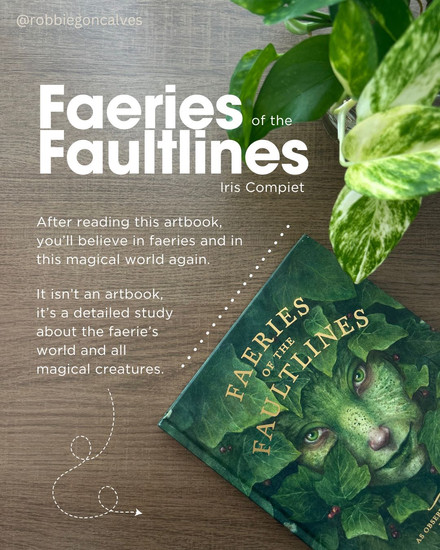
- “A Arte de Neil Gaiman”, Hayley Campbell
- “Livro Infantil Ilustrado: A arte da narrativa visual”, Martin Salisbury e Morag Styles
- “Sapiens: Uma Breve História da Humanidade", Yuval Noah Harari
- TO WATCH:
- OLIVER JEFFERS:
NEIL GAIMAN SPEECH: MAKE GOOD ART
- YOUTUBE CHANNELS I LOVE::
- PARUL ARORA: https://www.youtube.com/@parularora/videos
- EMA MALYAUKA: https://www.youtube.com/@emamalyauka5275
- MONKEYMINTAKA: https://www.youtube.com/@monkeymintaka
- JACKIE WOLVEN: https://www.youtube.com/@JackieWolven
- THE WILD PENCIL: https://www.youtube.com/@TheWildPencil
- KATIE MOODY: https://www.youtube.com/@KatieMoody
- NADYART: https://www.youtube.com/@nadyartillustration
- COURSES:
- IndigoBee Academy: “Sketchbook Magic – Unlock Your Creative Vision”, Elina Ellis
- DOMESTIKA: “Técnicas narrativas para histórias ilustradas”, Paula Bossio
- DOMESTIKA: “Portfólio online para ilustradores de livros infantis”, Marissa Valdez
- DOMESTIKA: “Técnicas de Sketchbook para Ilustração Infantil”, Ema Malyauka - https://www.domestika.org/pt/courses/2559-tecnicas-de-sketchbook-para-ilustracao-infantil
- PATREON: Ema Malyauka – https://www.patreon.com/cw/Ema_Malyauka
-PATREON: Rebecca Green - https://www.patreon.com/cw/rebeccagreen


Comments